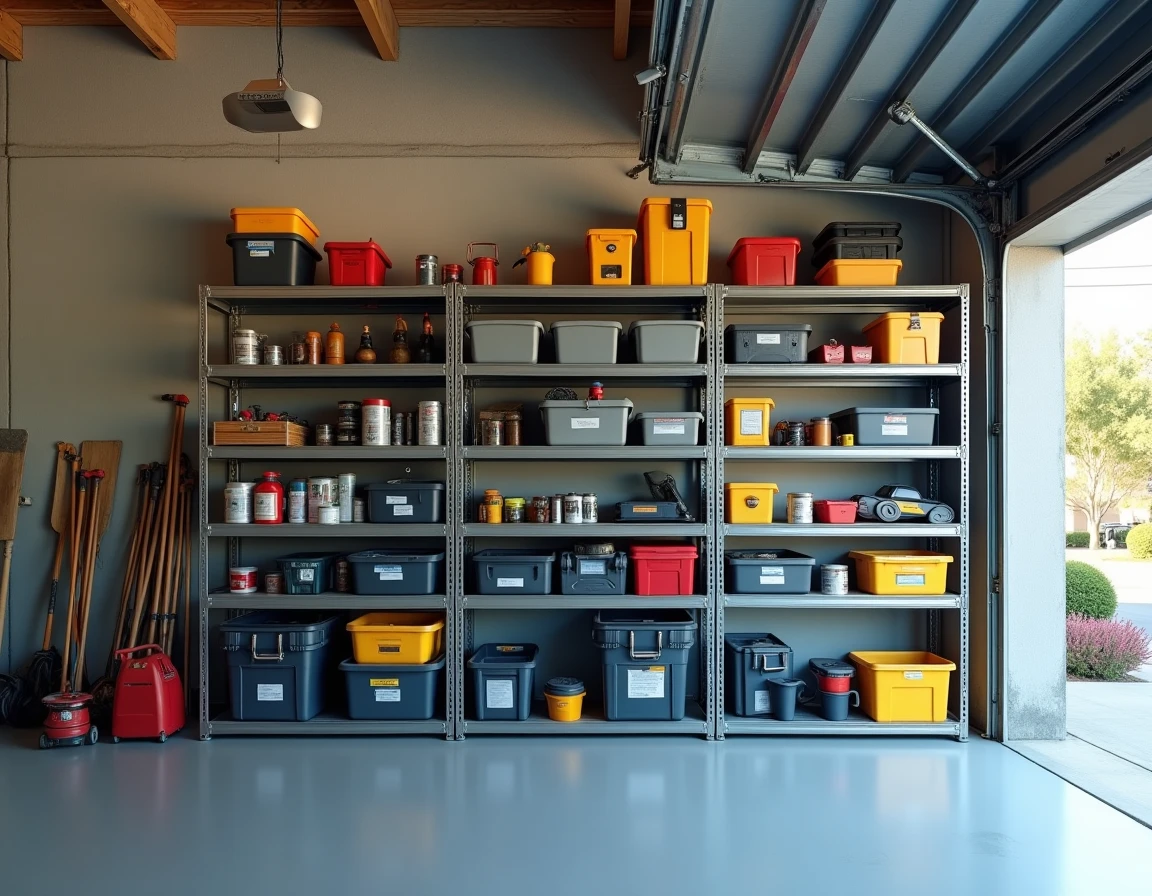
A 12 m² garage with a service door, a workbench in the corner, and winter tires stacked on the floor: this is the starting point for most storage projects. Before comparing materials or brands, it’s wise to first consider what is actually cluttering the space and what the wall can support.
Load capacity and wall mounting: what determines everything else
We first think about the size of the shelf, while the first filter should be the weight we plan to place on it. A set of paint cans, a complete toolbox, or containers of cleaning products can quickly weigh several dozen kilos per level. Checking the load capacity per shelf before any purchase avoids unpleasant surprises after a few months of use.
The nature of the wall is just as important as the shelf itself. On concrete block or concrete, a metal anchor holds up without issue. On drywall with insulation (common in newer garages), you need to reach the load-bearing wall or opt for a freestanding shelving unit, placed on the floor and braced against the wall.
To choose a suitable garage shelf, you should start by mentally weighing what you will store and by probing the wall with a stud finder. These two actions take five minutes and immediately eliminate half of the unsuitable models.

Metal, wood, or resin shelves: comparison based on actual use
The material is not a matter of taste in a garage. It’s a matter of constraints: humidity, temperature, proximity to a heat source or a charging station.
Metal shelving for heavy loads and humid environments
Steel (often galvanized or epoxy-coated) can handle the heaviest loads and is not afraid of residual moisture. Perforated shelves facilitate air circulation, which is useful if the garage is poorly ventilated. Metal remains the only recommended material near an electric charging station, as it limits heat buildup in case of an incident, in accordance with the recommendations of INERIS and CNPP for garages equipped with charging stations.
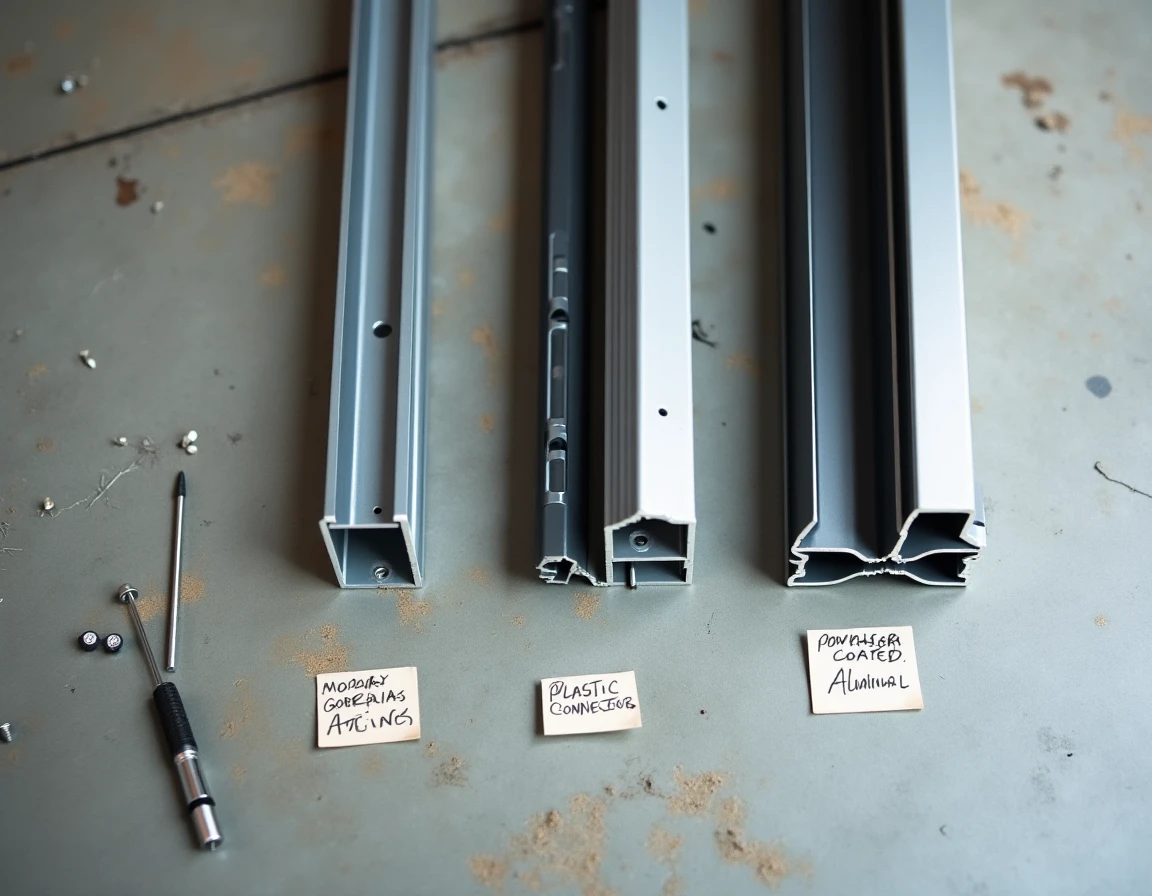
Another advantage: snap-together models without screws can be assembled in a few minutes, alone, without drilling. Feedback varies on the lateral rigidity of these systems, but wall bracing with straps or brackets is enough to stabilize the whole.
Wood and resin: more limited use cases
Wood (pine, OSB) is suitable for a dry, well-insulated garage, where light to moderately heavy items are stored. It can be easily cut and customized. However, in a closed collective garage, the decree of January 31, 1986 may restrict the use of combustible materials. It’s best to check the co-ownership regulations before installing raw wood in a basement.
Resin (polypropylene) is resistant to water and chemicals, but its load capacity per shelf is significantly lower than that of metal. It is reserved for light cleaning products, garden shoes, and small hardware bins.
Optimize garage space without drilling everywhere
In a narrow garage, every vertical centimeter counts. Instead of multiplying low shelves, prioritize shelving that reaches up to the ceiling height, with adjustable shelves. Utilizing height frees up the floor for movement and parking the vehicle without weaving through boxes.
Here are some concrete guidelines for organizing levels:
- At the bottom (from the floor to waist height): heavy and bulky items, tires, containers, bags of potting soil. The weight remains close to the center of gravity of the structure.
- In the middle (from waist to shoulder height): common tools, DIY boxes, regularly used products. Direct access, without a ladder.
- At the top (above shoulder height): seasonal items, holiday decorations, archives, camping gear. Rarely accessed, a step stool is sufficient.
This logic based on frequency of use works regardless of the model. It prevents having to move three boxes to reach the drill stored at the back.
Safety and regulations: points not to overlook
A shelving unit that tips under an uneven load can cause serious injuries. Securing the shelf to the wall with at least two high anchor points remains the most effective precaution, especially with children in the house.
In a co-ownership, regulatory questions also arise. Closed collective garages are subject to requirements regarding the fire reaction of stored materials. The application guide from DHUP (consolidated edition 2022) reminds us of the restrictions on combustible materials in parking areas. Before installing a wooden storage unit in a shared underground parking lot, consult the property manager.
For individual garages attached to the house, no specific standards apply to furniture. Common sense suffices: do not store flammable products on raw wood shelves next to an electrical panel, and leave sufficient clearance around outlets and meters.
Quick selection criteria before purchase
Rather than a long selection grid, here are the questions to ask yourself in front of the aisle or product sheet:
- What is the total expected weight per shelf, and does the model clearly display this information?
- Is the garage humid, heated, or equipped with a charging station? (If so, prioritize perforated metal.)
- Does the ceiling height allow for a five-level model, or should it be limited to four?
- Is assembly done alone or with two people, and do you have a drill to secure it to the wall?
A freestanding metal shelving unit with adjustable shelves covers the majority of needs for a home garage. You can then adjust the depth (often between 40 and 60 cm) based on the available space between the wall and the vehicle passage area.
The final choice often comes down to a trade-off between shelf depth and remaining passage width. Measuring the free space once the car is parked, then subtracting ten centimeters for clearance, gives the maximum usable depth. This figure, more than the design or brand, makes the decision.