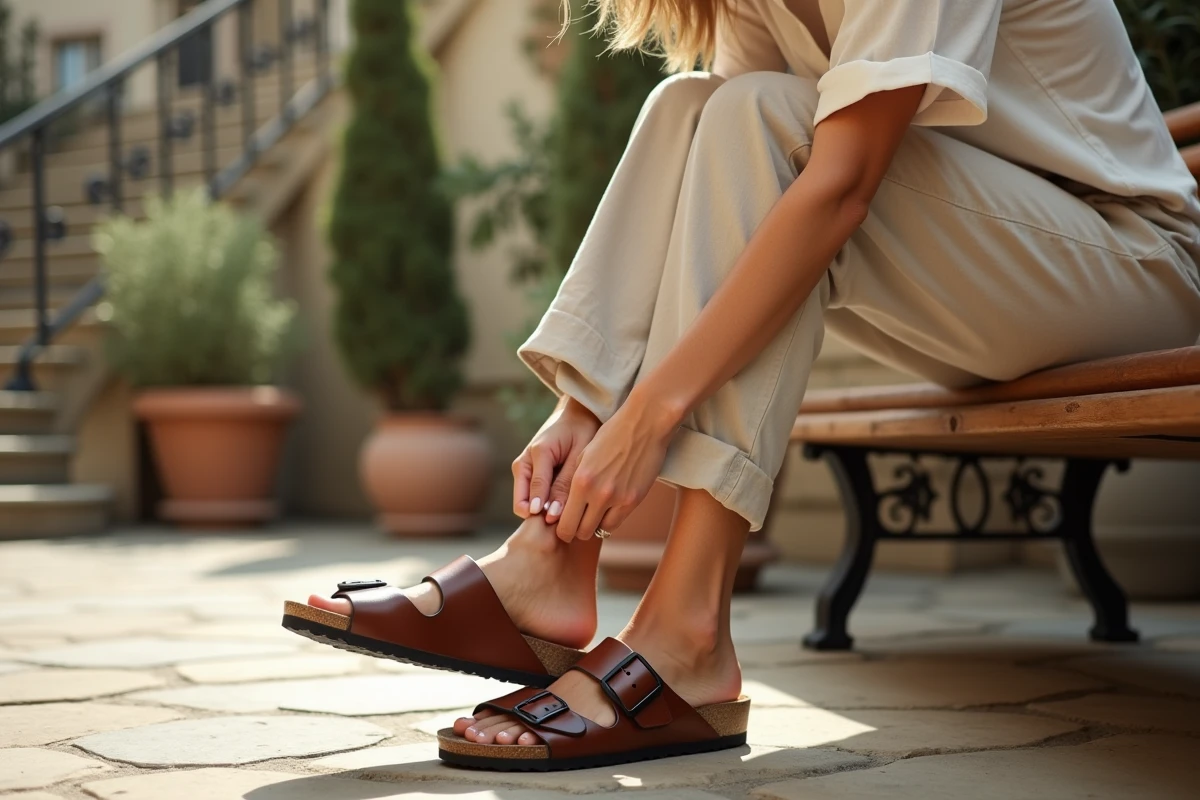
When looking for a pair of sandals to last all summer without ending up with burning feet, the Birkenstock reflex comes back systematically. The problem is real: the budget climbs quickly, especially if you want several pairs or if you’re hesitating between the Arizona and Gizeh models. Finding alternatives to Birkenstock sandals that hold up in terms of comfort, durability, and style requires looking beyond the usual references.
Cork sole and arch support: what really makes the difference
Before comparing brands, it’s worth identifying what makes a sandal comfortable over time. The molded footbed made of cork and latex, with pronounced arch support, remains Birkenstock’s technical signature. This is what prevents fatigue after several hours of walking.
Most low-cost copies replicate the shape without the material. You end up with an EVA foam sole that compresses in a few weeks, whereas cork retains its shape for months. The material of the sole determines the actual lifespan of the sandal, not its appearance.
When comparing the Birkenstock equivalents in France, this criterion of the insole clearly separates serious alternatives from mere visual dupes. A sandal that looks like an Arizona but whose foot sinks after three weeks is not an alternative; it’s a wasted purchase.
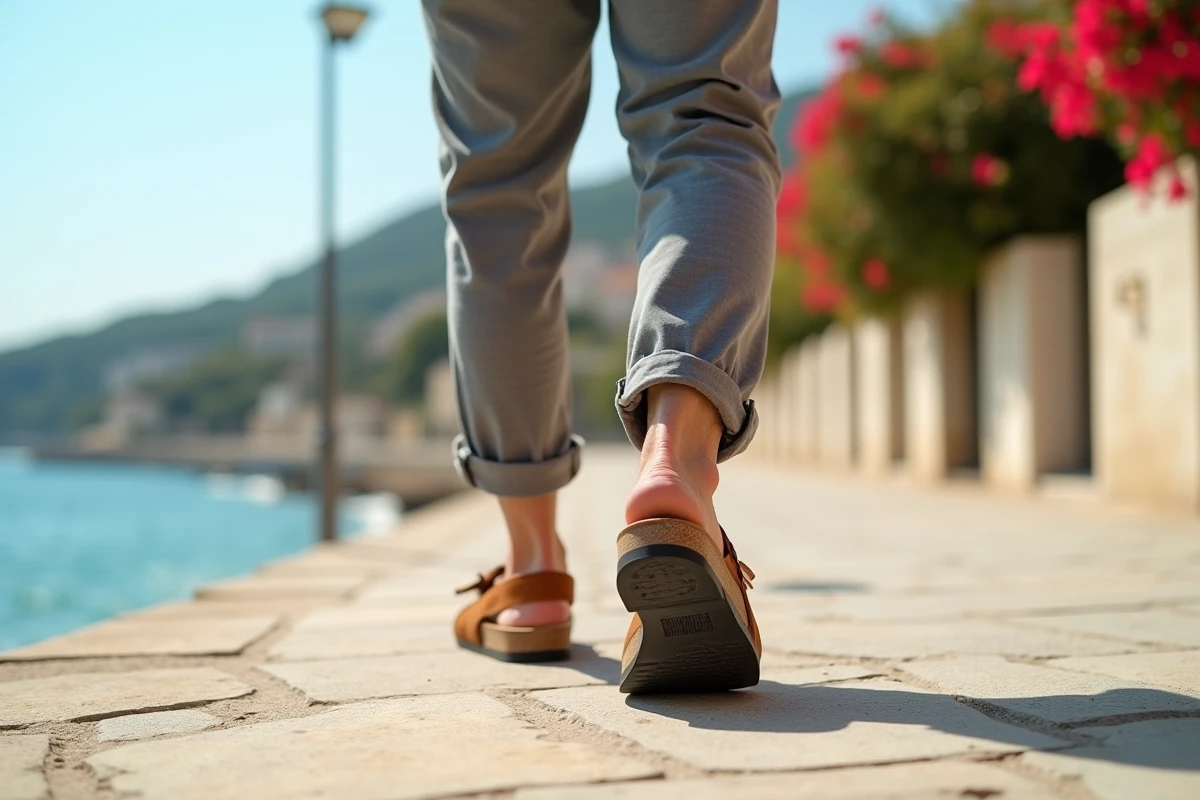
French and European alternatives to Birkenstock sandals: brands to watch
Scholl often comes up in discussions, and for good reason: the brand offers two-strap models with anatomical soles at a more accessible price range. Feedback varies on the longevity of the cork depending on the ranges, but the initial comfort is comparable for everyday summer use.
Teva and Mango: two different approaches to sandal style
Teva focuses on strap sandals with rubber soles, designed for more active use (light hiking, riverbank). You lose the chic aspect of Birkenstock, but gain versatility in terrain. For those who sweat a lot from their feet, synthetic straps dry much faster than leather.
Mango, on the other hand, offers mules and strap sandals that take on the Birkenstock style in a fashion context. The price drops significantly, but the materials do not aim for the same durability. We’re talking about a sandal for one or two seasons, not a purchase for several years.
NAE and lesser-known vegan alternatives in France
The Portuguese brand NAE makes Birkenstock-style sandals from vegan materials (microfibers, natural rubber). These options are still not widely featured in French selections, but they have been included in Good On You’s international recommendations since 2024. For those looking for an alternative without animal leather and with documented environmental traceability, this is a niche that is developing.
Low-cost Birkenstock-style sandals: what we really sacrifice
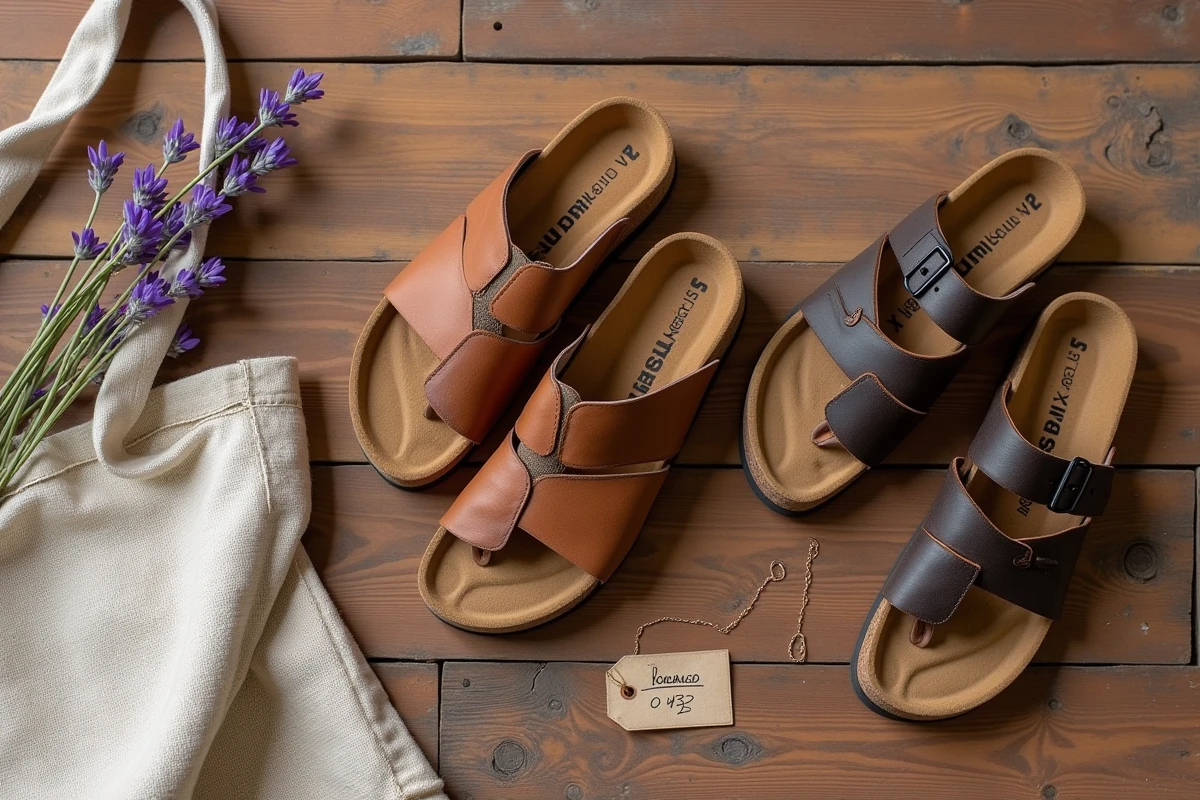
Dupes under 30 euros (like those from Amazon or Decathlon) represent the majority of searches. We understand the appeal: visually, some models are almost identical to the Arizona or Boston. In practice, here’s what changes:
- The insole is made of foam and not cork, which removes arch support and the material’s ability to mold to the foot over time.
- The straps made of faux leather or rigid plastic cause friction in the first few days, whereas genuine leather gradually softens.
- The outsole, often made of low-quality EVA, loses its grip on wet surfaces and wears unevenly in a few months.
This doesn’t mean these sandals are useless. For occasional use (beach, garden, short outings), they serve their purpose. The problem arises when you wear them for eight hours a day expecting the same comfort as a Birkenstock.
European regulation and the announced end of false “eco” claims
One point that classic comparisons do not address: the European regulation on the ecodesign of sustainable products (ESPR) and the Green Claims Regulation adopted in 2024 will gradually require shoe brands sold in the European Union to document their environmental claims. Durability, reparability, material traceability: everything must be proven.
In practical terms, “Birkenstock-inspired” sandals that display an eco-friendly discourse without proof become risky for manufacturers. Brands that can provide verifiable data on their materials and production chain will gain an advantage. This is an additional selection criterion when hesitating between a cheap copy and a transparent alternative regarding its practices.
Choosing based on use: daily comfort, fashion, or terrain
The best choice depends on what you really expect from the sandal. Rather than classifying brands by price, we gain clarity by reasoning by usage situation:
- For prolonged daily comfort with arch support, stick with Scholl or the premium ranges of cork-soled brands.
- For active use (walking, wet terrain), Teva offers robustness and quick drying that cork cannot provide.
- For style without durability requirements, Mango and accessible dupes get the job done for a season.
- For a documented vegan and eco-responsible approach, NAE and brands certified by Good On You deserve exploration.
Summer comes back every year, and feet that struggle with the heat deserve better than a default purchase. Taking ten minutes to check the material of the sole and the construction of the straps before ordering can prevent buying the same pair every year.