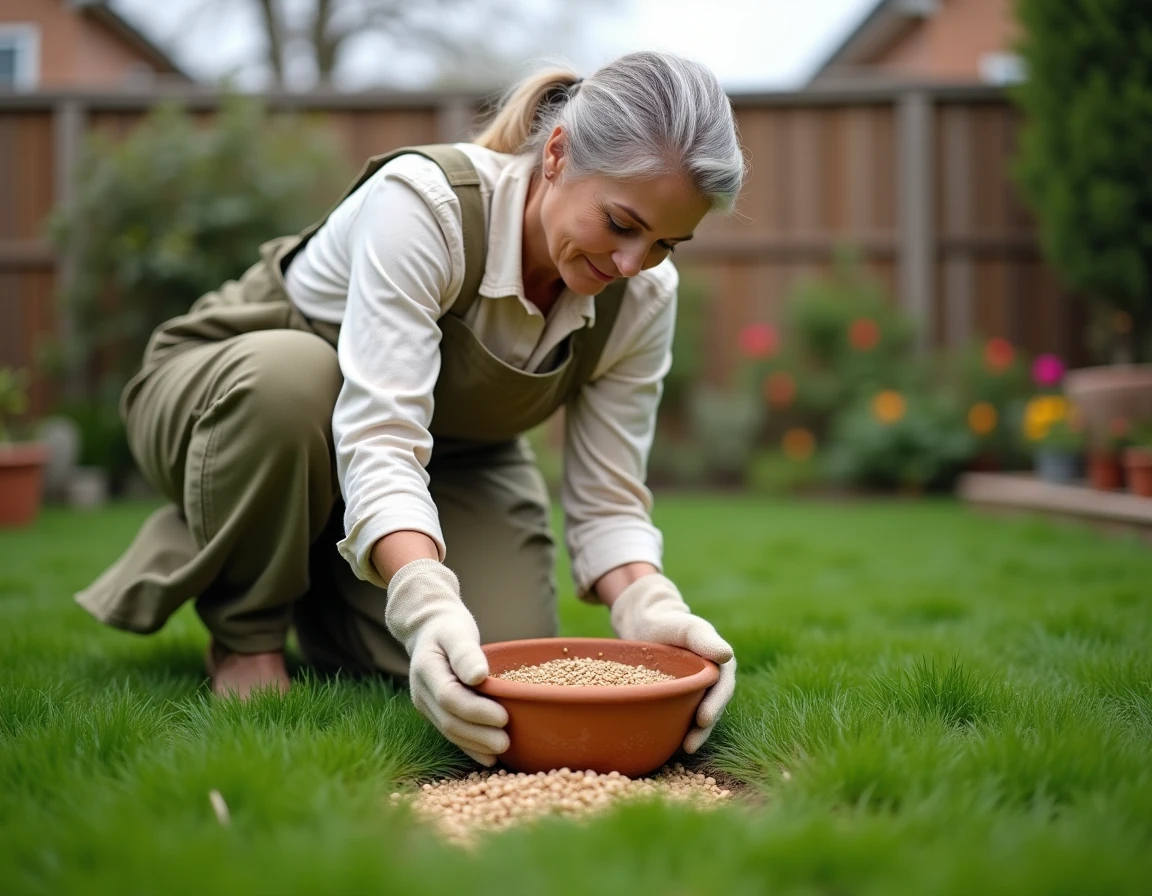
The range of natural fertilizers for lawns has expanded in recent years, driven by increasing local restrictions on synthetic products and a broader environmental awareness. Choosing a natural fertilizer for lawns is not just about replacing a bag of chemical pellets with a bag labeled “organic.” The nature of the product, its composition, and the quantity applied all determine both the result on the lawn and the actual impact on the environment.
Reducing inputs before choosing a product: the overlooked angle
Most guides focus on the type of fertilizer, organic or mineral, without questioning the overall volume of input. However, some communities recommend reducing fertilization, including natural ones, to limit nutrient leaching into stormwater systems. The “natural” nature of a fertilizer does not make it harmless in excess.
A soil already rich in organic matter, for example in a garden that has been composted for several years, does not have the same needs as impoverished clay or sandy soil. Before any purchase, soil analysis remains the most cost-effective action. It is inexpensive and avoids overdosing an already present element, which can promote weeds or acidify the soil.
Among the approaches that help limit external inputs, grasscycling deserves special attention. This practice involves leaving grass clippings in place. The City of Kirkland, in Quebec, officially presents it as an eco-friendly gesture capable of significantly reducing the need for fertilizers.
The clippings decompose within a few days and return a significant portion of the nitrogen, potassium, and phosphorus consumed by the plant back to the soil. Grasscycling constitutes a natural fertilizer in its own right.
Combining grasscycling with a natural lawn fertilizer Triferto allows for meeting the lawn’s needs while reducing the amounts applied throughout the year.
NPK composition of natural fertilizers: reading the label correctly
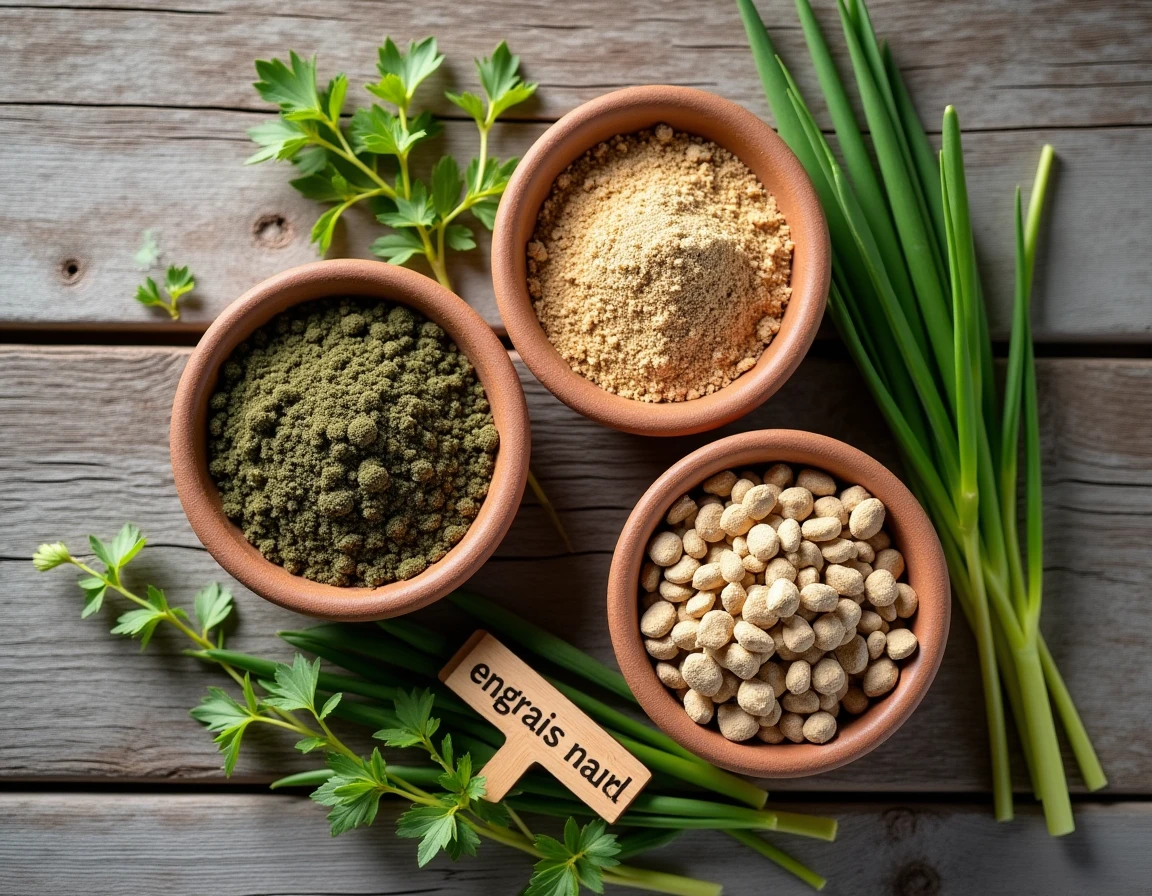
Every fertilizer, whether natural or not, is characterized by its NPK ratio: nitrogen (N), phosphorus (P), and potassium (K). On a lawn, nitrogen stimulates growth and green color. Phosphorus promotes rooting. Potassium enhances resistance to cold and diseases.
Organic fertilizers often have lower NPK levels than mineral fertilizers. This is not a flaw. A moderate NPK ratio releases nutrients gradually, in sync with microbial decomposition in the soil. The lawn absorbs better, and the risk of leaf burn is almost nonexistent.
However, this slow release means that the visual effect (greening, densification) is less rapid than with a soluble mineral fertilizer. On a very yellowed or sparse lawn, field reports vary on the time needed to observe satisfactory results with a purely organic fertilizer.
Common forms and their action profile
- Granules made from poultry manure or hydrolyzed feathers provide a relatively quick nitrogen input for an organic fertilizer, with visible effects in a few weeks.
- Mature compost, spread in a thin layer in spring or autumn, improves soil structure as much as it nourishes the lawn, but its NPK ratio remains low and variable from batch to batch.
- Fertilizers made from beet vinasse are rich in potassium and are well-suited for lawns exposed to frost or heavy foot traffic.
- Nettle manure, often cited, mainly provides nitrogen and iron in diluted solution. Its use on lawns remains marginal compared to vegetable gardens, and its preparation takes time.
Natural lawn fertilizer and soil biological life: a direct link
A frequent argument in favor of organic fertilizers concerns soil life. The addition of organic matter feeds microorganisms (bacteria, fungi, earthworms) that structure the soil and make nutrients assimilable by the roots.
A synthetic mineral fertilizer provides directly soluble elements but does not nourish this fauna. In the long term, a soil fertilized exclusively with minerals may see its organic matter decrease and its structure degrade. The lawn then becomes more dependent on external inputs, in a less virtuous cycle.
The available data do not allow for precise quantification of the gain in microbial biomass depending on the type of organic fertilizer used on lawns. Studies focus more on large crops. What we do know is that any addition of organic matter stimulates soil biological activity, provided that the pH is not too acidic (below 5.5, microbial activity slows significantly).
Application schedule and common mistakes on lawns
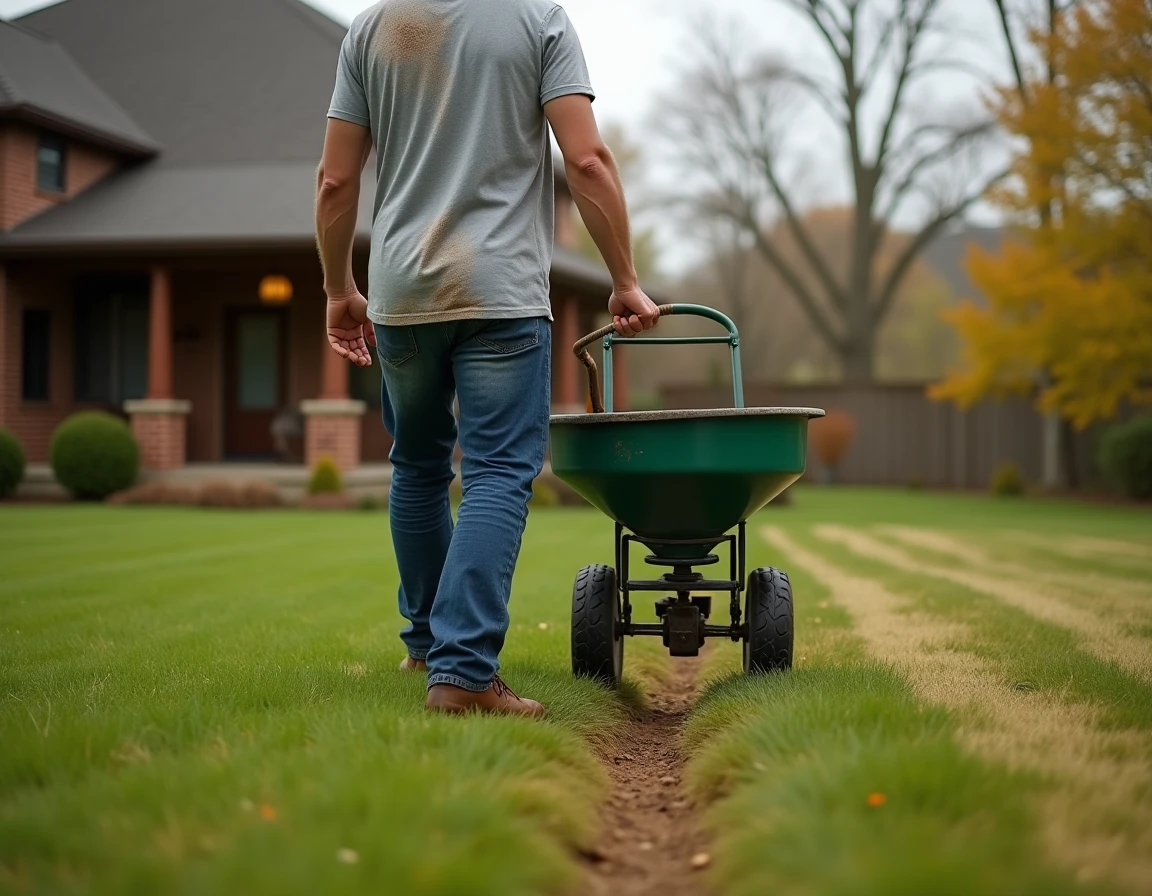
The best natural fertilizer loses its effectiveness if applied at the wrong time. The soil must be biologically active to decompose organic matter, which requires a minimum temperature at the root level.
Two application windows are relevant for most French climates:
- Spring (March-April), when the lawn resumes growth and the soil warms up.
- Autumn (September-October), to strengthen the roots before winter and prepare the lawn to restart better in the following spring.
- Summer, during dry periods, should be avoided: dry soil blocks decomposition, and the dormant lawn absorbs almost nothing.
Dosage: the trap of “more is better”
Overdosing a natural fertilizer will not burn the lawn as an excess of mineral nitrogen would, but the excess nutrients end up in groundwater or waterways. Excess phosphorus also promotes algae proliferation in aquatic environments, even when it comes from an organic source.
Respecting the dosage indicated by the manufacturer and spacing applications by several weeks remains the basic rule. A lawn maintained by grasscycling and receiving one or two applications of organic fertilizer per year generally meets its needs without excess.
Choosing a natural fertilizer for your lawn is as much about moderation in inputs as it is about selecting the right product. Soil analysis, grasscycling, and adherence to the application schedule count more than the brand printed on the bag.