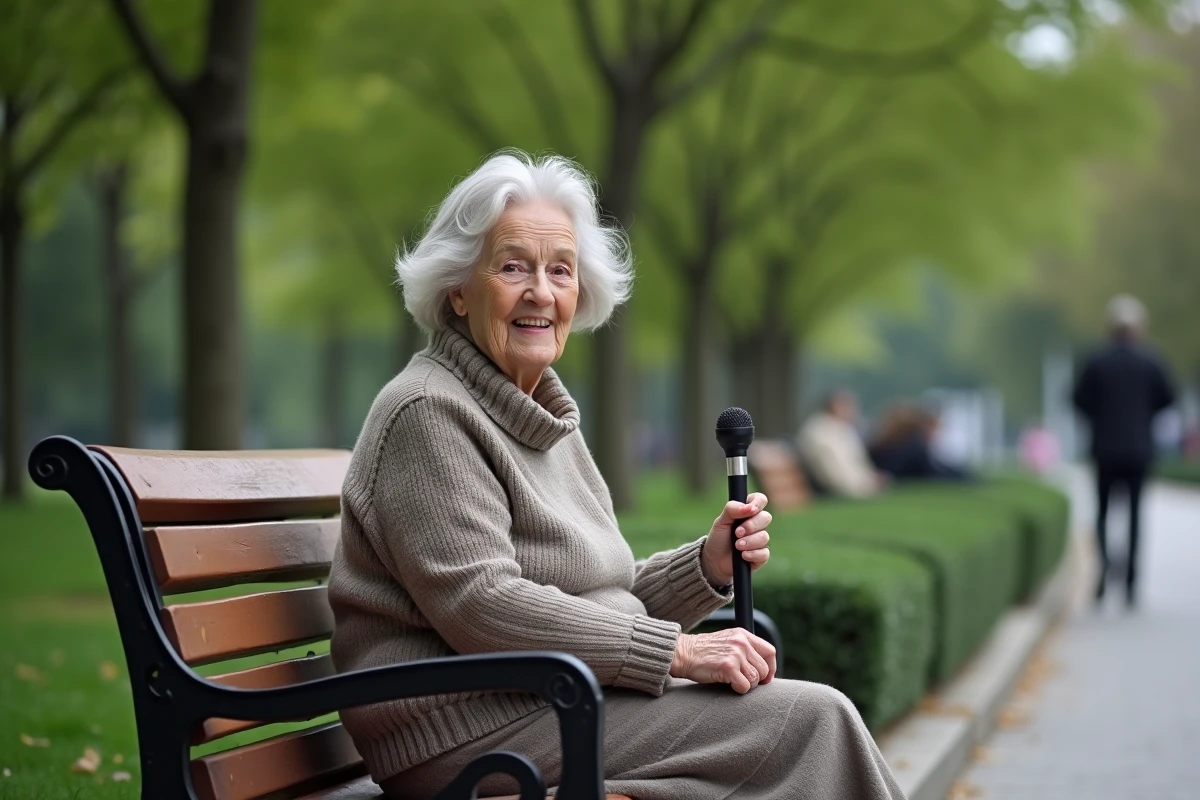
7%. This is the share of the French population that has crossed the threshold of 80 years, according to figures from Insee published in 2023. A threshold that, a few decades ago, seemed unattainable, and which today shapes a new face for the national demographics.
This aging brings concrete consequences for the healthcare system, the economy, and collective organization. The increase in the number of very elderly people forces public officials to reassess their priorities and adjust policies at the national level.
What is the percentage of French people reaching or exceeding 80 years today?
France is witnessing its population aging, which is a measurable fact in the very structure of the age pyramid. According to the latest report from Insee, nearly 7% of the inhabitants are now 80 years or older. This is a continuously rising share, reflecting the progress in life expectancy and the transformation of the country.
Women, who are largely in the majority among octogenarians, make up more than two-thirds of this age group. Their superior longevity explains this disproportion. Among men, the increase exists but remains more moderate. When looking at the map of France, regional variations are striking: coastal areas, the South, and the Center have a higher concentration of elderly people, while some major cities maintain a younger demographic structure.
The percentage of the population over 80 years old in France is part of a European trend. The Hexagon is positioned at the average of the European Union, similar to countries like Germany or Italy, where demographic transition has already begun several decades ago. This movement questions the French social model, healthcare coverage, and intergenerational solidarity. It forces society to rethink access to care, urban planning, and collective priorities to support this demographic shift.
Demographic aging: what trends for the coming decades?
The growth of the elderly population is not limited to France. It is part of a global dynamic, driven by increased life expectancy and the arrival of baby boom generations into old age. Insee forecasts a continuous rise in the share of those aged 80 and over in the French population: the age pyramid is changing, and by 2050, this age group could represent nearly 12% of the inhabitants, effectively doubling in less than thirty years.
This scenario is not confined to Europe. The growth in the number of people over 80 far exceeds that of the global population as a whole. In Latin America and the Caribbean, the dynamics are particularly rapid: the number of seniors is set to explode in the coming decades, while on the Old Continent, demographic transition has been established for several generations.
This aging is not just a statistical fact. It requires a reevaluation of the role of the elderly, strengthening intergenerational solidarity, and adapting public policies. Insee’s data shows how this structural evolution shapes the collective future, in France and elsewhere. Society will have to face, in the coming years, an increase in the proportion of very elderly people, a direct consequence of demographic transformation and the new organization of life cycles.

What challenges does society and the healthcare system face with an increasingly aging population?
The reality of aging in France is now present in all debates. Those over 80 represent nearly 7% of the population today, and their presence profoundly alters society. Health takes center stage: more chronic diseases, care for dependency, maintaining autonomy. Hospitals, already under pressure, must manage long and complex care pathways.
Behind the numbers, other challenges emerge. Public spending related to health is skyrocketing, while family solidarity faces challenges from urbanization and the dispersion of loved ones. The debate extends far beyond just medical issues. It encompasses the living standards of seniors, their access to suitable housing, the fight against isolation, and their integration into the social fabric.
Here are some transformations that this demographic shift imposes:
- Reorganization of the labor market: adapting jobs, continuing professional activity, transferring skills between generations.
- Increased pressure on public finances: rising healthcare costs, seeking solutions to finance dependency.
- Adaptation of cities and urban policies: creating accessible spaces, developing suitable transportation, strengthening local services.
This demographic shift pushes us to rethink the role of the elderly in society. Society stands to gain by inventing new bonds of solidarity. Insee’s figures remind us: it is not just about providing better care, but about reinventing the social contract at the national level. In the face of this aging France, the question is no longer “when,” but “how” to adapt. No one goes through this change without leaving a mark.