In an era where sustainability has become a global priority, ancestral construction techniques are resurfacing, generating increasing interest among modern architects and builders. These methods, forged over centuries, are characterized by their low ecological impact and harmonious integration with the environment. They utilize local and renewable materials, thereby reducing carbon footprints and promoting biodiversity. By revisiting these traditional practices, building professionals are rediscovering know-how that combines respect for nature with the longevity of structures, offering an authentic response to contemporary challenges in sustainable construction.
The Ecological Foundations of Ancestral Construction Methods
Ancestral construction practices, long before the advent of the term eco-construction, already embodied the principles of sustainable development. The use of sustainable building materials such as rammed earth, lost wood totk, or stone, all sourced from local natural resources, significantly reduces the environmental impact of construction. These materials, breathable and moisture-regulating, contribute not only to a healthy habitat but also to a minimal carbon footprint, in harmony with nature’s cycles.
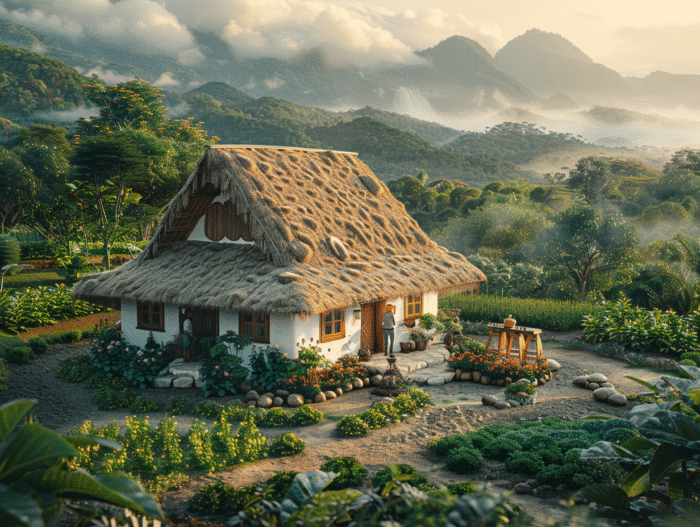
The cob house is a striking example. This construction technique uses a mixture of earth, water, plant fibers, and sometimes sand to create robust, insulating walls. Rammed earth, the primary material of cob, perfectly illustrates the use of sustainable materials: abundant, non-polluting, and fully recyclable, it represents a pillar of sustainable architecture.
Within these construction methods, every detail reflects a communion with the environment, from design oriented according to natural air currents to rainwater management for foundations. These techniques illustrate how ancestral construction practices fit into a holistic vision, where building means respecting and valuing ecological balance.
Lost wood totk, often cited in vernacular construction traditions, demonstrates particular ingenuity in the use of natural resources. This method involves using pieces of wood that would otherwise be discarded, in a spirit of total material economy. These practices, far from being obsolete, are powerful models for contemporary construction, which aspires to reduce its ecological footprint while preserving humanity’s built heritage.
The Environmental and Social Impact of Rediscovering Traditional Techniques
The Nubian vault house stands as an example of the resilience of ancestral practices in the face of modernity. This structure, which maintains a pleasant indoor temperature and is 4 to 6 degrees cooler than the outside, reveals a deep understanding of the environmental dimension in the building sector. The Nubian Vault Association, co-founded by Séri Youlou and Thomas Granier, is dedicated to promoting the use of rammed earth, an endemic and low-cost material, while training local artisans, with 1,500 workers already trained in West Africa.
The environmental impact of such initiatives is not limited to reducing carbon footprints through the use of natural materials. It also extends to creating a market for carbon credits, a proposal by Thomas Granier to finance sustainable construction projects. Far from being a mere financial mechanism, carbon credits become a tool for valuing construction techniques that respect the environment and promote sustainable development.
The benefits of eco-construction, such as regulating indoor temperature, demonstrate that the rediscovery and valorization of traditional techniques bring tangible benefits. These methods, once adapted to contemporary requirements, suggest a path towards a habitat more in harmony with its environment and resilient to climate change.
The rediscovery of these techniques is not limited to a purely ecological interest. It embodies a powerful vector for social development, generating local employment, transferring skills, and strengthening community autonomy. Sustainable construction, through the lessons it draws from the past, thus becomes a pillar for a future where the balance between man and his environment is restored and valued.