The digital age is disrupting traditional methods of teaching and learning. With the increasing integration of computing in educational settings, students and teachers are discovering new ways to convey and acquire knowledge. From the use of interactive whiteboards to online courses, as well as educational applications and virtual reality, technology offers innovative educational tools. These advancements raise questions about accessibility and effectiveness, while promising greater personalization of learning. This technological shift inspires reflection on the evolution of education in an increasingly connected world.
The impact of computing on learning methods
Intellilangue, an ambitious project, aims to study the learning of English in middle school through an innovative E-learning platform equipped with conversational agents. This approach seeks to immerse students in an online learning environment, where technology strives to replicate the conditions of linguistic immersion. The platform thus intends to promote active and personalized learning, far from traditional methods and more in line with the digital skills required by our society.
In the wake of this initiative, the concept of E-learning and its associated technologies, such as conversational agents, support language learning and other disciplines by facilitating access to a multitude of educational resources. These digital tools not only transform the way knowledge is delivered but also the way it is received by learners. This is where approach and avoidance behaviors come into play, psychological concepts that deserve in-depth study in the context of interaction with computer systems. Understanding these behaviors can influence interface design and pedagogical strategy, in order to maximize student engagement, even those classified as ‘Mobile Junky’, who are often more receptive to digital materials than to traditional ones.
The Digital Workspaces (ENT) also embody this shift, offering diverse services such as managing school life and communication among various stakeholders in the educational world: students, parents, teachers, and administrative staff. These platforms centralize information and facilitate exchanges, contributing to smoother management and increased transparency. At the same time, digital educational resources such as Éduthèque or the Educational Digital Resource Banks (BRNE) enrich the educational landscape and offer an unprecedented variety of teaching and learning materials, helping to overcome some limitations of books and blackboards.
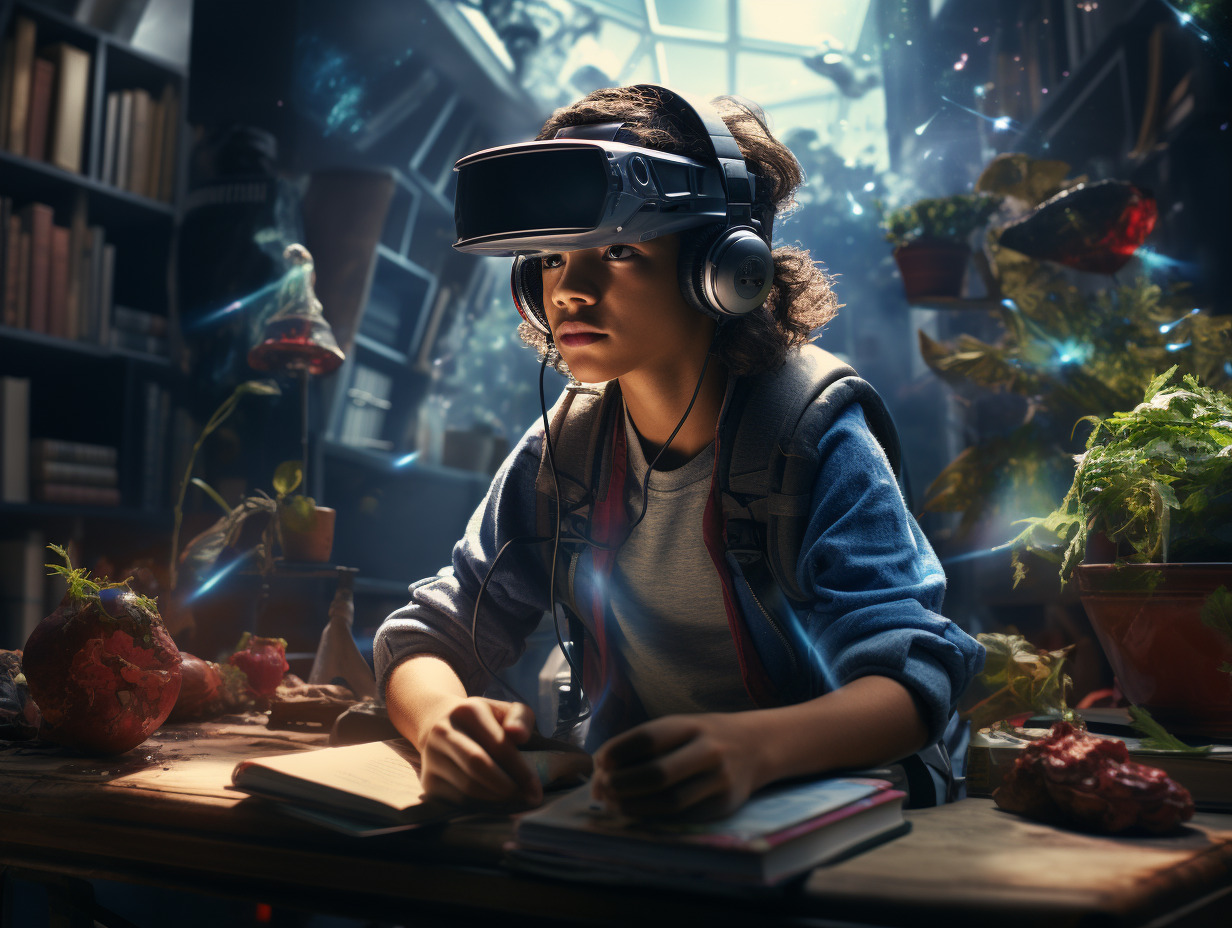
The challenges and opportunities of integrating technologies in educational settings
Digital skills: the pivot of contemporary education, their assessment and certification, embodied by Pix, respond to the Framework of Digital Competencies (CRCN). Their integration represents both a challenge for national education and an unprecedented opportunity to prepare students for the digital society. Mastery of these essential skills translates into better employability and active participation in an increasingly digitized world.
The training of teachers is crucial in the adoption of technologies in educational settings. The M@gistère platform, dedicated to the continuous training of teachers, and the integration of C2i2e skills into MEEF master’s programs reflect a desire to modernize teaching. These efforts must continue and intensify to ensure a homogeneous and effective integration of computing technologies into pedagogical practices.
Information and Communication Technologies (ICT), despite their omnipresence in the social fabric, face slow integration into education. This reality raises multiple questions about the adequacy of educational systems with the demands of a digital society. Pedagogy must therefore evolve, not only to include ICT in its arsenal but also to rethink teaching methods in light of the potential offered by these tools. The role of education in training students in digital skills is not limited to the transmission of knowledge; it is about preparing them to become responsible and informed citizens in a society where digital technology has become an essential vector of communication and information.